Two prototypes tested to generate solar energy at structures providing shade
Two prototypes are being tested which combine the generation of solar energy with the creation of structures to provide shade in urban space. The initiative is part of the Climate Plan and the result of an innovation challenge launched by the Barcelona Local Energy Agency, through the Fundació Barcelona Innova.
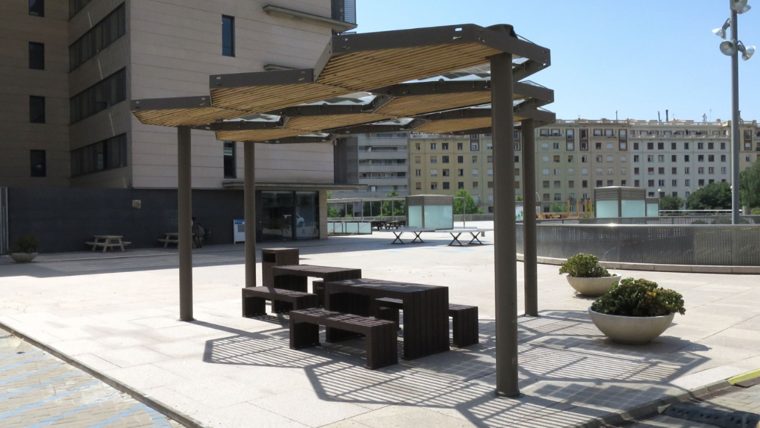
One of the projects chosen is “OSMA. Ombra Solar Modular Adaptable”, put forward by Benito Urban SLU and the Centre Tecnològic Eurecat. It is based on a system of hexagonal modules that can be put together in different configurations, making it easy to install in urban space. It prioritises the generation of solar power, using monocrystal panels with glass-glass technology. Its elements can be moved again to generate shade in the hottest months or let light through when needed. This solution aims to minimise environmental impact, incorporates recycled materials and offers greater resistance to the elements.
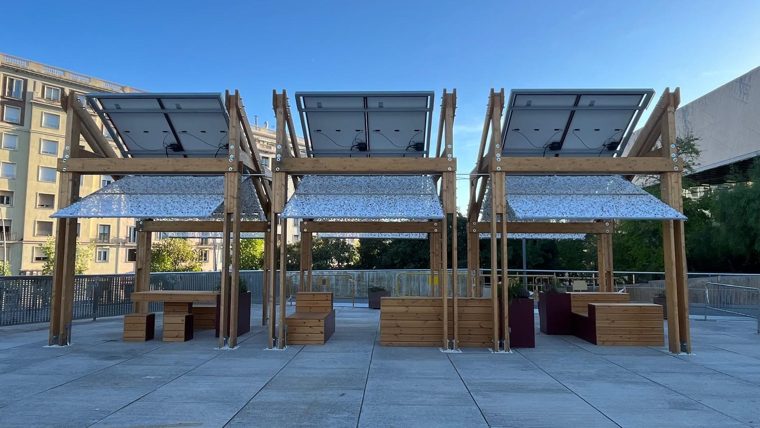
The other project is “Ombra Viva. Refugis actius amb energia solar per al benestar comunitari”, developed by the Catalan Advanced Architecture Institute (IAAC), Esitec Energia SL and the Associació Equal Saree. The solution offers a multi-functional shelter that combines shade, the generation of solar energy, water filtering and communal uses. It is made up of a modular wooden structure with solar panels that can rotate to optimise the solar radiation harnessed according to the time of year. The housing for the panels is mobile so that they can be configured to adapt to the space. The solution includes photocatalytic fabrics to filter air and has a social component, based on joint creation with users. The aim is to offer a space for rest, interaction and social cohesion.
The two prototypes have been installed at the Campus Diagonal Nord of the UPC – BarcelonaTech. They will be tested for a year to analyse their performance in different periods and different seasonal weather during the year. The data obtained will help determine the potential of these structures to be scaled up and replicated in other parts of the city.
The two solutions were selected by a committee of representatives from the Barcelona Local Energy Agency, Barcelona Innova, Sant Adrià de Besòs Town Council, the association of Industria Engineers of Catalonia, the Spanish Photovoltaic Union of Catalonia and the UPC. Each team received funding of up to 50,000 euros, roughly covering 80% of the eligible cost of the project.